
Context
Four soft pivots and two hard pivots in under two years. I joined as the first full-time product designer, right after the seed round, with one working prototype on TestFlight.
Catch Social set out to build a social app that felt like a real room: background music, a crowd, and the small signals people use to start a conversation. The founding assumption was that crossing eyes with someone a couple of times is soft consent to talk. Crossing eyes, catching eyes, Catch.
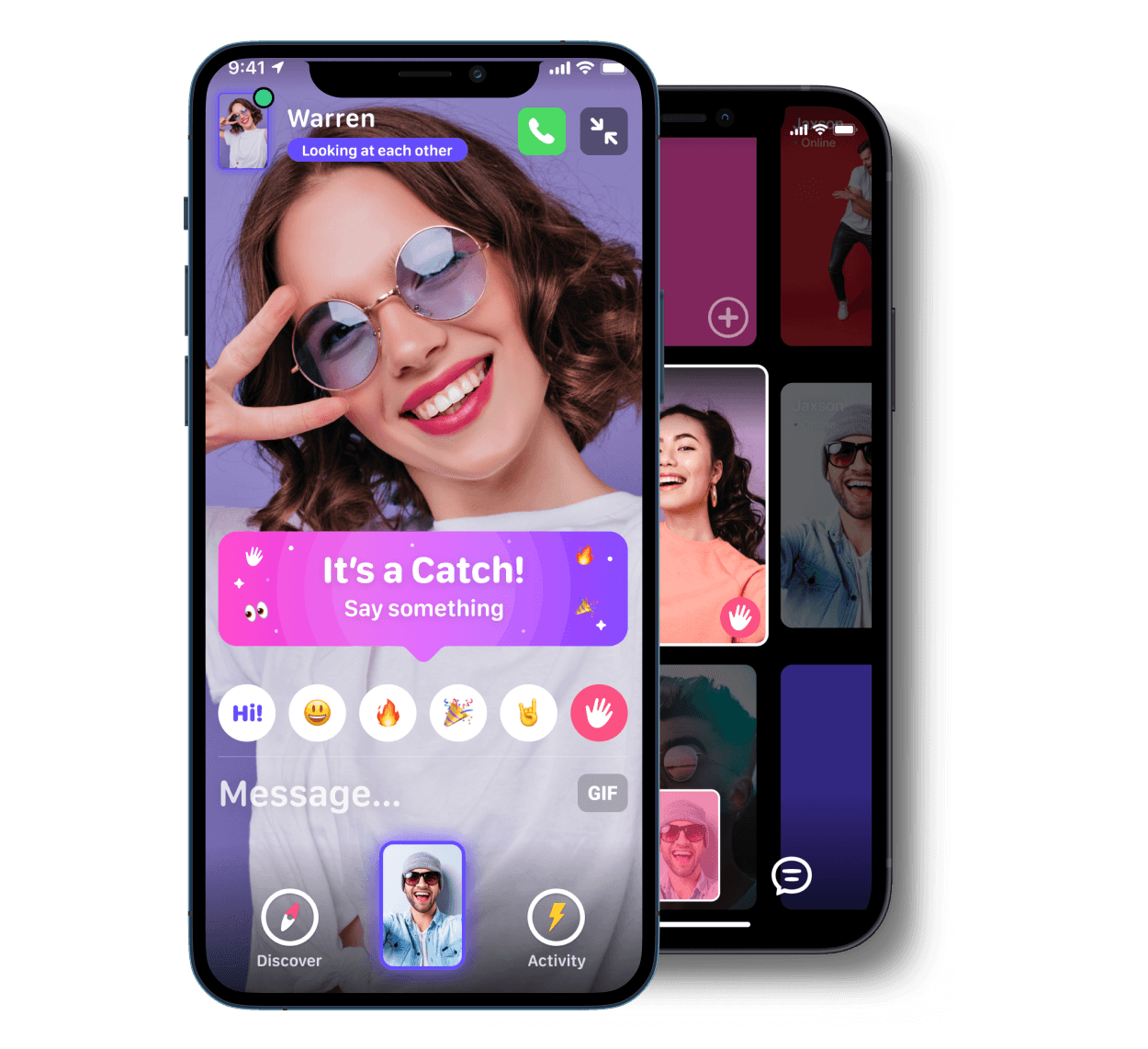
Most social apps end up looking like each other. The bet at Catch was that a different interaction model, on a phone, could feel closer to going out. My job was to design that model for iOS, test it with real users every week, and redesign it each time the data said so.
Let's Design
Unconventional designs come with a cost.
Challenge is to be different, mimic the real-world experience as much as possible, create good vibes, crowd, and background music, and 'looking at each other's experience. Fun! Phones are small devices, there is only so much space, which makes it harder to create the feeling of a crowd. You can only see so many people on your screen at once. Vertical scrolls are great for many things, but it was clear that it was one of the main blockers for a feeling of a crowd.
Enter Free-4-All Grid View
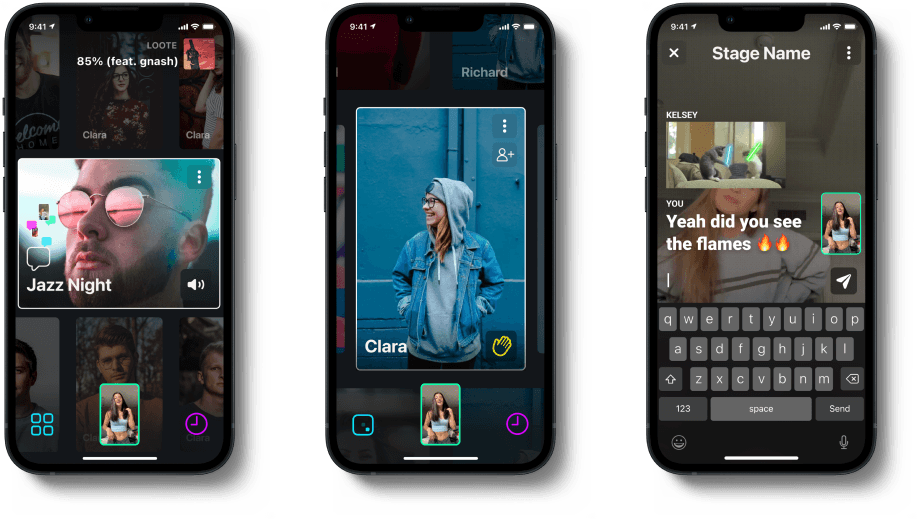
We were calling it a grid view for the lack of a better word, but here is how it looks;
The idea is; Imagine seeing everyone from afar, and as you get closer (pinch-in), you will start seeing fewer people but more of the people. You can start having interactions as you get close to the people. And you can feel someone is looking at you, so you can look back to catch them!
User Testing
Every week for six months. This was one of the biggest highlights of my career so far, I've learned an incredible amount from listening, asking questions, and observing how people are using the app, and interacting with each other.
After weeks of building, we started testing the ideas with real users; We reached out to a couple of college students, had them fill out a form to see if they are matching our target users, and then invited them to a weekly session where we test and then gather feedback about the product.
This was one of the biggest highlights of my career so far, I've learned an incredible amount from listening, asking questions, and observing how people are using the app, and interacting with each other.
I still sometimes look back on the notes that I took during the interviews…
Every week after the interviews we sent out another form to the test group and asked a couple of questions to both gather feedback, see the pain points and how would they feel if they would not have access to Catch Social anymore. The last question was to measure the PMF. We were aiming for 40%
Unfortunately, I cannot share every detail and decision on a public forum, for reasons like usability, feasibility, and ease of use it was decided to ditch the grid idea.
Learning points:
- New interactions are always harder to get used to
- There are always different kinds of reactions to knowing someone is looking at you
- People do have fun in a friendly environment.
- Gathering around a 'stage' is a good idea
Pivoting to Dance Floor
3D experiences are heavy, both mentally and on devices. Devices are not responding well to 40+ live videos + audio in a 3D environment with no constraints.
We kept iterating the app as we knew for a little more while, until one time I was asked to test this new idea: "Dancing on a floor in a 3D environment"
We had a prototype and gathered the test group to validate the idea;
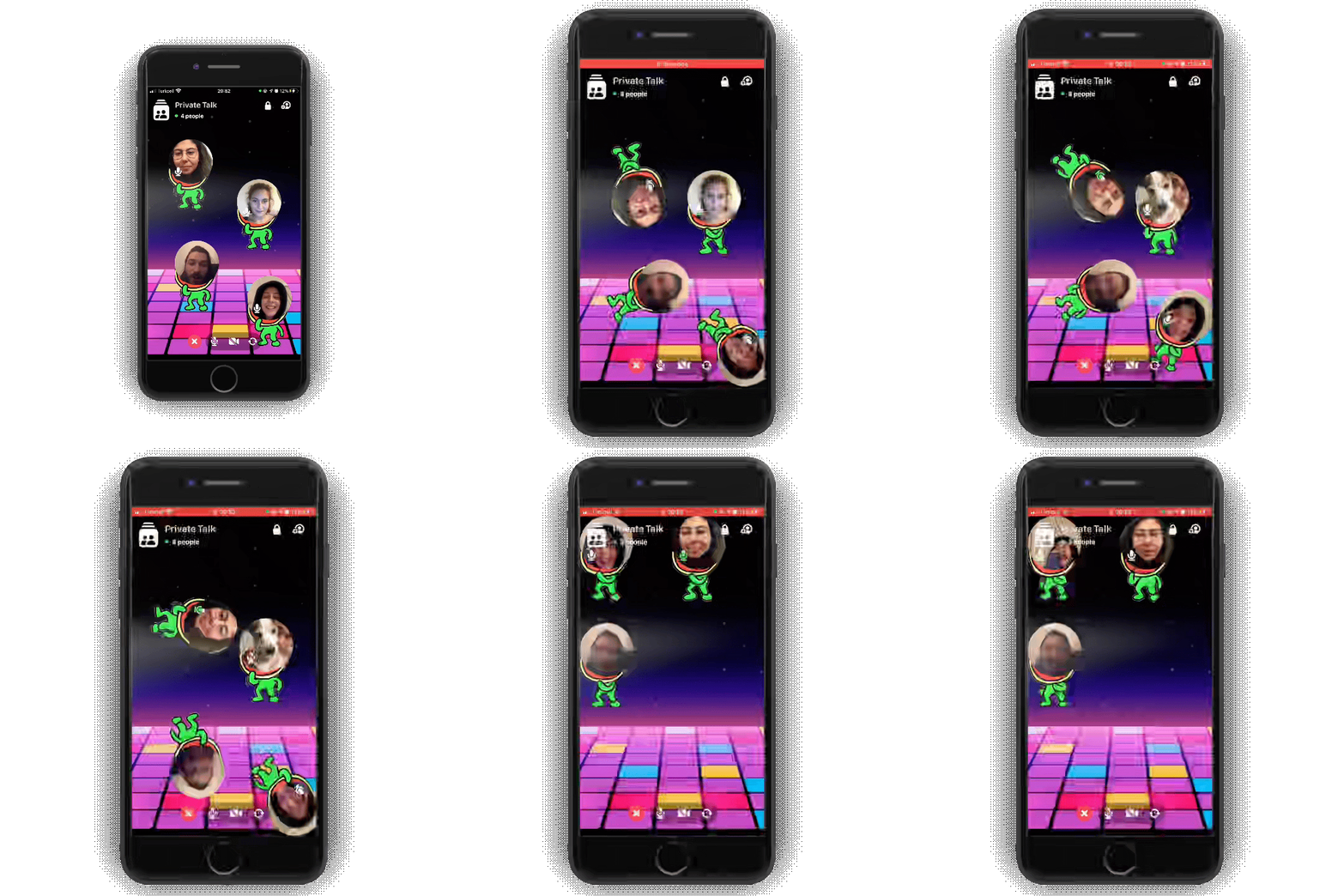
I've shared the results of the interview with the team, we discussed it and it was decided to do a hard pivot to "Dance Floor"
Dance Floor started as a really interesting and fun concept. Imagine going out to a bar or a disco and spending some time with your friends over music. The name Dance Floor comes from the old days' popular dance floors. And the floor tiles are what we have on our grid for people tiles. Every step is a new person that you can hang out with.

We built a 3D dance floor, literally. We had 3d characters with people's live cameras on the heads of the characters. We had music, we had rooms and we had vibes.
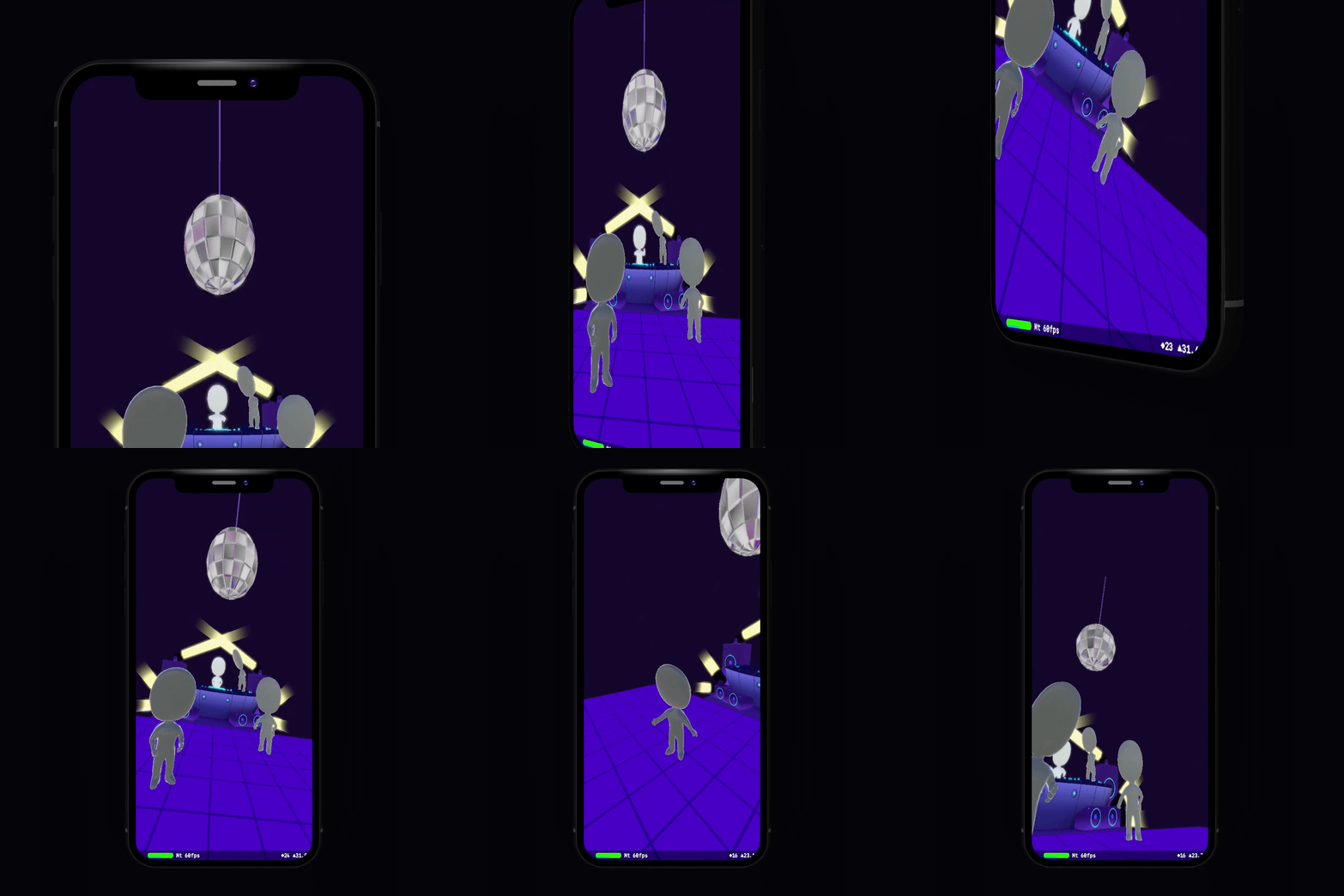
It was really fun, it was hard but fun.
Learning points:
- 3D experiences are heavy, both mentally and on devices.
- Devices are not responding well to 40+ live videos + audio in a 3D environment with no constraints.
We kept testing the dance floor idea, recognized the bugs, and spent time fixing them while also building some new features at the same time.
After a short while, the team decided to do another hard pivot to 'WDYT'
WDYT – together-shopping experience
At this point we were out of the woods that we know, we were working towards a social experience like no other and now working for a social shopping experience. No one in the team was experienced enough in shopping to create assumptions and we didn't have time for research. We hired new people, some people left the company and we started building the experience.
We built a shared browser screen in a room. Where one person shares what they see with others while others can comment, mark, suggest, and guide them.
What I took from Catch Social
Weekly research sessions taught me more about interaction design than any course. New interaction models take longer to learn than you expect. Real-time video and 3D on a phone have hard limits. And a small team can change direction fast when the research is shared openly.